
Bali Freight Forwarder Journal ·
Bali Warehouse & Fulfillment Center Trends 2027
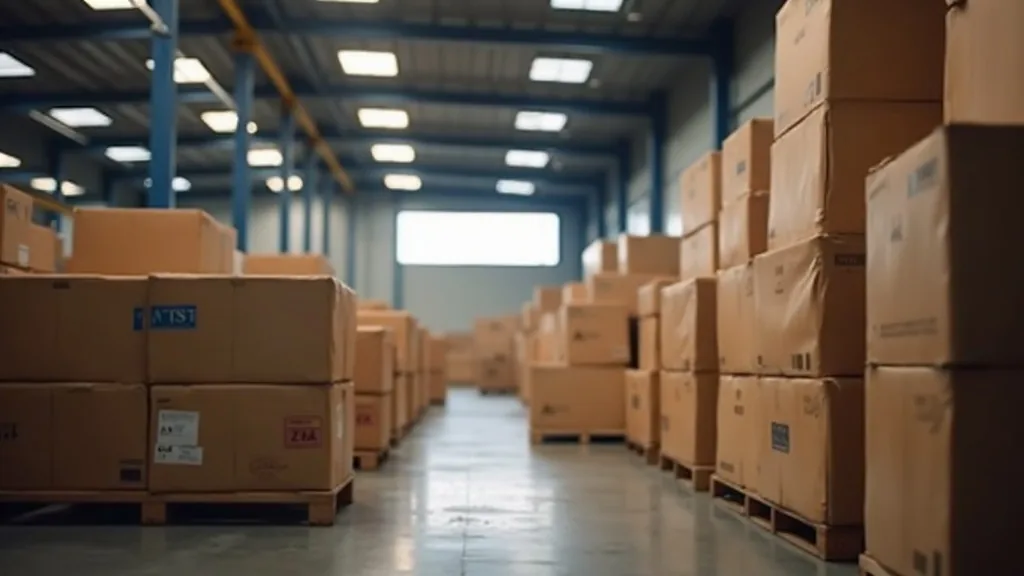
Bali’s warehouse and fulfillment picture heading into 2027 is an outlook, not a prediction. Dated 2026 signals — national demand for regional fulfillment and same/next-day delivery, cross-border parcel growth forecast near 7.34% CAGR through 2031, and AMR robots lifting warehouse processing speeds 40% or more — point to deeper consolidation capacity and gradually restructured handling and storage costs for Bali exporters.
Why Is Indonesian Warehouse Investment Accelerating Into 2027?
Indonesia’s warehouse build-out is being pulled by delivery expectations, not pushed by speculation. Per 2025-2026 market data, national demand for regional fulfillment — stock positioned closer to buyers so parcels arrive same-day or next-day — has become the strongest single driver of new warehouse investment across the archipelago.
The freight numbers behind that shift are dated and specific. Sea and inland waterways carried about 77.6% of Indonesian forwarding revenue in 2025, which keeps port-adjacent warehousing at the centre of any network plan. Cross-border courier-express-parcel revenue is forecast to grow around 7.34% CAGR from 2026 to 2031, and Indonesian air freight around 7-8% CAGR over the same window — two categories that live or die on fulfillment speed.
Government spending amplifies the pull. National infrastructure programs exceed USD 400 billion through 2031, including Sea Toll routes and deep-sea ports under the Global Maritime Fulcrum strategy, with strategic projects cutting some inter-hub transit times by up to 40%. Faster inter-island legs make regional warehouses more useful, because inventory can be replenished quickly instead of stockpiled deep.
| 2026 signal | Attribution | What it could mean for Bali by 2027 |
|---|---|---|
| Same/next-day delivery demand | per 2025-2026 market data | Pressure for island-side stockholding, not just transit sheds |
| Parcel growth near 7.34% CAGR 2026-2031 | according to 2026 market forecasts | More small-parcel export flows needing pick-pack capacity |
| USD 400B+ infrastructure, Sea Toll, deep-sea ports | national programs through 2031 | Faster Bali-Java legs; leaner buffer stock on the island |
| AMR processing gains of 40%+ | 2025-2026 automation case studies | Handling-fee mathematics change wherever robots are deployed |
How Could These Trends Move Bali Handling and Storage Costs by 2027?
Consolidation capacity is where the cost question lands first. Today’s Bali freight forwarding rates for LCL are quoted per cubic metre, and per published Bali forwarder terms in 2026 the bundle typically includes ocean freight, inland trucking Bali-Surabaya, pickup anywhere in Bali, export packing, export documents, and humidity absorbers. Warehouse economics sit inside almost every one of those line items, so a shift in storage and handling costs ripples straight into the per-cbm quote.
| Cost component | 2026 baseline (indicative) | Plausible 2027 direction |
|---|---|---|
| LCL per-cbm bundle | All-in per cubic metre, per published Bali forwarder terms | Stable to slightly softer if consolidation volumes scale |
| Storage beyond free days | Charged per week per cbm | Upward pressure from demand; new capacity could offset it |
| Handling per touch | Built into LCL bundles | Down where automation reaches Java transit sheds |
| Export crating and packing | Manual, ISPM-15 compliant for wood | Broadly stable — craft cargo resists automation |
| Cargo insurance | Commonly about 2% of declared value | Structure unchanged; declared value drives the premium |
One structural effect is easy to miss. Better consolidation makes it easier to reach the roughly 13 cbm point at which FCL usually becomes cheaper than LCL, so 2027 could see more Bali shippers graduating to full containers earlier in their growth curve. Every figure above is an indicative estimate as of 2026 — costs move with lane, fuel, and season, and final decisions rest with carriers and authorities.
Can AMR Robots Really Lift Processing Speeds by 40% or More?
The headline number comes from 2025-2026 warehouse-automation case studies, where autonomous mobile robots handling goods-to-person picking and sortation lifted processing speeds by 40% and more in high-volume fulfillment centres. The honest Bali answer: those gains will not arrive everywhere, and they will not arrive on the island first.
Java’s fulfillment hubs around Jakarta and Surabaya are the natural first adopters, because parcel volume justifies the capital outlay. Bali’s export cargo profile — teak furniture, stone carvings, textiles, villa fit-outs from the Sukawati and Gianyar craft belt — is crate-heavy, irregular, and labor-crafted, which resists full automation.
The likelier 2027 path for Bali facilities is hybrid: barcode scanning, warehouse management software, and partial AMR use in sortation zones, while crating stays manual. Bali shippers may still capture automation savings indirectly, because most containerized Bali cargo passes through Surabaya transit warehouses where robots are more plausible.
Where Does Bali’s Warehousing Base Actually Stand in 2026?
Bali’s seaport is Benoa Port, yet most containerized exports move by inland trucking from Bali to Surabaya, with Tanjung Priok in Jakarta and Tanjung Emas in Semarang as the other strategic gateways. Typical LCL routing published by Bali forwarders in 2026 sees cargo loaded in Bali, unloaded in Java, reloaded in Singapore, then unloaded at destination — multiple touches that make warehouse-grade crating essential rather than optional.
Air-side capacity is sending its own signal. FedEx opened a new gateway at Ngurah Rai International Airport in Denpasar in October 2024, including streamlined customs handling for Class 9 dangerous goods — the kind of investment that usually precedes, not follows, fulfillment demand.
A working Bali consolidation warehouse in 2026 typically covers:
- Pickup aggregation from Seminyak, Canggu, Ubud, Sanur, Kuta, Denpasar, and the Sukawati/Gianyar craft belt
- Export packing and ISPM-15 compliant crating for wood packaging
- Moisture control with humidity absorbers for the sea leg
- Document preparation: commercial invoice, packing list, and Bill of Lading
- Container stuffing and trucking dispatch to Surabaya
That base is functional but transit-oriented. The 2027 question is whether demand converts these sheds into genuine fulfillment nodes that hold stock, pick orders, and ship parcels — or whether Bali stays a consolidation island feeding Java’s machines.
What Should Bali Exporters Do Before 2027 Arrives?
An outlook is only useful if it changes behaviour now. Six moves worth making in 2026:
- Re-verify HS codes before the HS 2028 nomenclature revisions force the issue mid-shipment.
- Reprice US-bound flows with duties included — the US suspended de minimis treatment for Indonesia in August 2025, so every commercial shipment to the US now attracts duties and full customs processing.
- Track EU timber-legality and deforestation-free due-diligence rules, which tighten through 2027 for wood and rattan.
- Model the 13 cbm FCL crossover as your consolidation volumes grow, rather than defaulting to LCL.
- Confirm your forwarder’s electronic export filing under DGCE Regulation 22/2024, since transitional ambiguities were still documented through 2025-2026.
- Get storage free-days and per-week rates in writing before peak season tightens capacity.
None of this requires betting on a prediction. It requires reading dated signals and leaving room for them to be wrong — which is what the strongest exporters were already doing in 2026.
Frequently Asked Questions
Will warehouse automation lower Bali export handling fees by 2027?
Possibly at the margins, not dramatically. The 40%+ processing gains reported in 2025-2026 AMR case studies apply mainly to Java’s high-volume fulfillment hubs; Bali’s crate-heavy craft cargo stays labor-intensive. Savings would surface first in Surabaya transit handling inside LCL bundles. Treat any 2027 fee relief as indicative until carriers publish revised terms.
Is Bali getting large fulfillment centers like Jakarta or Surabaya by 2027?
The 2026 signals point to incremental growth in consolidation and pick-pack capacity, not mega-fulfillment campuses. Bali’s export mix — furniture, stone carvings, textiles, handicrafts — favours crating warehouses over parcel automation, and most containerized cargo still trucks to Surabaya. Watch Benoa-adjacent and Gianyar-corridor capacity announcements through 2027 rather than expecting Java-scale facilities.
Should exporters reserve Bali consolidation warehouse space ahead of 2027?
Regular shippers should negotiate storage terms early. Published 2026 Bali forwarder terms bundle limited free storage, and rising regional fulfillment demand could tighten availability into 2027. Locking written per-week, per-cbm storage rates and free-day counts now protects budgets — though rates remain indicative and final decisions rest with carriers and authorities.
Need this priced for your lane?
Tell us the cargo, the lane and the Incoterm. You get a written, leg-by-leg quote — every charge named.