
Bali Freight Forwarder Journal ·
Cargo Insurance for Bali Shipments: What It Covers
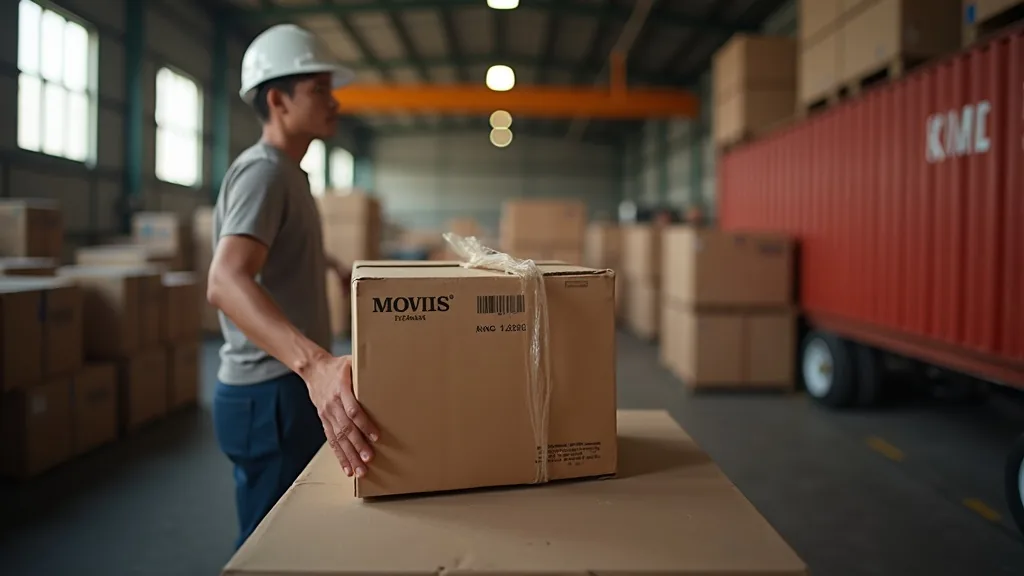
Marine cargo insurance for shipments from Bali covers physical loss or damage to your goods from the moment they are collected until final delivery, and it typically costs about 2% of the declared value as of 2026, per published Bali forwarder terms. It responds when cargo is dropped, crushed, soaked, or lost — risks that uninsured shippers absorb entirely on their own.
That 2% buys more protection than most first-time exporters expect. A shipment of teak furniture worth USD 20,000 can usually be covered for around USD 400. Set that against the cost of re-commissioning a dining suite carved in the Sukawati–Gianyar craft belt and the arithmetic is rarely close. Forwarders who arrange insured shipping from Bali issue the certificate alongside your export documents, so cover attaches when the truck collects from your supplier in Ubud, Canggu, or Denpasar — not at the port gate.
What Does Cargo Insurance Cover on a Bali Shipment?
Most policies sold alongside Bali freight are written on “all risks” marine cargo terms. The name overstates things slightly: it means all sudden, accidental, external causes of loss, not literally everything that can go wrong. The core promise is simple. If your goods leave Bali in sound condition and arrive damaged, short, or not at all, the policy responds.
Here is how standard cover breaks down in practice:
| Event | Typically covered? | Notes |
|---|---|---|
| Total loss (vessel casualty, container lost overboard) | Yes | Rare, catastrophic when it happens |
| Handling damage — dropped crates, forklift punctures | Yes | The most common claim type on LCL cargo |
| Water damage and container condensation | Yes, with conditions | Humidity absorbers and sealed wrapping support the claim |
| Theft, pilferage, or non-delivery of packages | Yes | A precise packing list proves what actually shipped |
| General average contributions | Yes | Your billed share when cargo is sacrificed to save a vessel |
| Loss caused by poor or insufficient packing | No | The classic exclusion — professional export crating closes it |
| Inherent vice (warping, mould in under-dried timber) | No | Kiln-dried stock and moisture checks reduce the exposure |
| Delay, loss of market, consequential costs | No | Excluded even when the delay clearly caused financial loss |
General average surprises people. Under maritime law, when a master sacrifices cargo to save the voyage — jettisoning containers in a storm, say — every cargo owner on board is billed a proportional share, insured or not. Cargo insurance pays that bill; without it, your goods can arrive intact and still cost you money.
How Much Does It Cost, and What Value Should You Declare?
As of 2026, published Bali forwarder terms price marine cargo cover at roughly 2% of declared goods value. Declared value normally means the figure on your commercial invoice; some shippers add the freight cost on top so that a total-loss claim makes them completely whole.
| Declared value (example cargo) | Indicative premium at ~2%, as of 2026 |
|---|---|
| USD 5,000 — mixed handicrafts and textiles | About USD 100 |
| USD 12,000 — villa fit-out furniture, LCL | About USD 240 |
| USD 30,000 — teak furniture order, FCL | About USD 600 |
Two habits keep the premium honest. Declare the real invoice value — claims settle against the figure you declared, so shaving it to save USD 50 caps a USD 12,000 recovery. And keep the invoice and packing list consistent, because insurers cross-check both when a claim lands.
These figures are indicative, dated estimates — not a contract. Premiums move with the goods, the lane, and the insurer’s appetite, and final decisions rest with carriers and authorities.
Why Does LCL Multi-Handling Strengthen the Case for Cover?
The typical LCL routing published by Bali forwarders in 2026 runs like this: cargo is loaded in Bali, trucked overland, unloaded in Java, reloaded in Singapore, then unloaded again at destination. Count the touches. Before your crate reaches a buyer in Sydney or Rotterdam, it has been lifted, stacked, and restacked at least four times by different crews.
Every touch is a forklift, a crane sling, a pallet edge. Stone carvings are dense and chip at corners. Framed artwork hates point pressure. Rattan and textiles absorb moisture in a container crossing the equator. This is why the same forwarders who publish LCL rates per cubic metre push professional crating so hard — and why insurers sometimes condition cover on it. A claim on a properly crated, ISPM-15-stamped piece is straightforward to document; a claim on a shrink-wrapped one invites the poor-packing exclusion.
Air cargo ex-Ngurah Rai International Airport sees fewer handling events, one reason fragile, high-value pieces often fly. But fewer touches is not zero, and cover at roughly the same 2% stays cheap against what one tarmac drop can do.
What Documents Do You Need to File a Claim?
Claims fail on paperwork more often than on principle. Build the file before anything goes wrong:
- Written notice of claim — sent to your forwarder or the insurer as soon as damage is discovered. Policies carry short notification windows, often measured in days.
- Photographs — packaging and contents, taken before the packaging is discarded.
- Commercial invoice — establishes the insured value.
- Packing list — proves what was in each numbered package.
- Bill of Lading or Air Waybill — the Bill of Lading is a title document for sea freight; the Air Waybill is its air equivalent.
- Insurance certificate — the document issued at booking.
- Annotated delivery receipt or survey report — visible damage noted at signature, or an independent surveyor’s report for larger losses.
- Repair quotes or salvage estimates — to quantify partial losses.
The single most common own-goal: the consignee signs a clean delivery receipt, unpacks a cracked statue two days later, and hands the insurer an easy argument that the damage happened after delivery. Note everything at the door.
What Is Usually Excluded, and How Do You Close the Gap?
Every exclusion in the coverage table has a practical countermeasure, and most sit inside the standard Bali export workflow anyway. Published Bali LCL rates already include export packing and humidity absorbers, with wood and stone endorsements and special fumigation available as line items where the cargo requires them.
- Poor packing → pay for professional export crating rather than relying on supplier wrapping.
- Moisture and mould → kiln-dried timber, humidity absorbers in the container, sealed wrap.
- Quarantine re-handling → ISPM-15-compliant crates, the international standard for wood packaging.
- Delay losses → not insurable under ordinary cargo cover; plan around it instead. Australia, the most predictable lane out of Bali, is commonly quoted at 4–8 weeks door-to-door in 2026 commentary.
Treat the premium as part of the freight cost, not an optional extra. On a multi-touch LCL routing through Java and Singapore, 2% of declared value — indicative as of 2026, always subject to final terms from insurers and carriers — is the cheapest component of the entire move.
Frequently Asked Questions
Does cargo insurance cover the trucking leg from Bali to Surabaya?
Yes, when the cover is written warehouse-to-warehouse, which is standard practice per published Bali forwarder terms in 2026. Most containerized Bali exports move overland to Surabaya before sailing, so a policy starting at the port would miss one of the longest legs. Confirm your certificate names the Bali pickup point, not Benoa Port or Surabaya.
Can I insure one-off artwork or custom furniture at full value?
Generally yes, provided the declared value matches your commercial invoice and you can evidence it with a gallery receipt, commission agreement, or artist invoice. Insurers settle against documented value, not sentimental value. For unique pieces, photograph the item both uncrated and crated before pickup — proving pre-shipment condition is half of any successful artwork claim.
How long do I have to report damage after my shipment arrives?
Immediately, in writing and with photographs, and always before discarding packaging. Policies commonly set notification windows measured in days, and concealed-damage clauses are stricter still. Note visible damage on the delivery receipt at signature. The fastest-settled claims on Bali shipments in 2026 are the ones documented on the day of delivery.
Need this priced for your lane?
Tell us the cargo, the lane and the Incoterm. You get a written, leg-by-leg quote — every charge named.