
Bali Freight Forwarder Journal ·
How to Ship Artwork From Bali Safely by Sea Freight
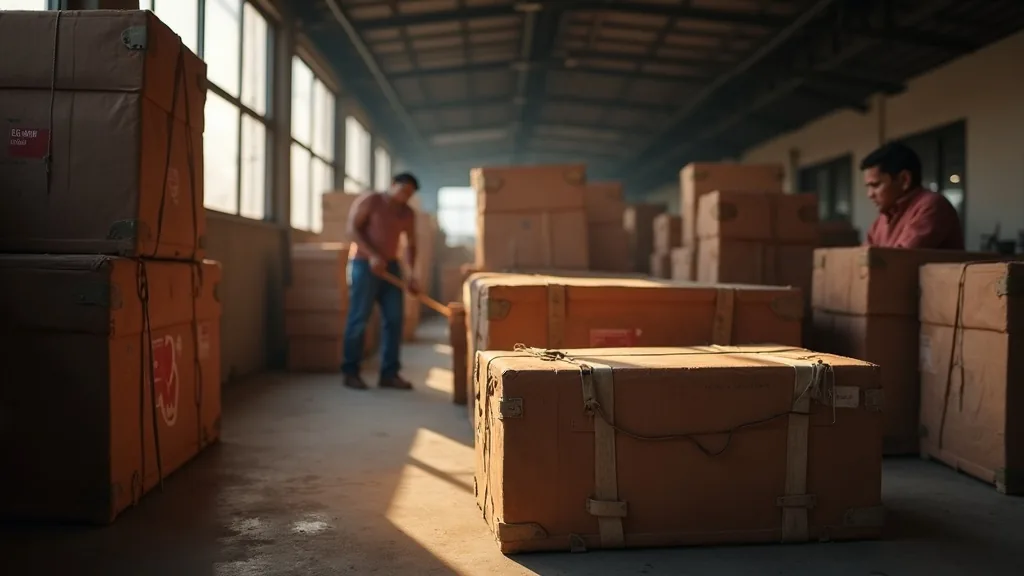
Shipping artwork from Bali safely by sea freight comes down to three decisions: build a museum-grade crate that survives the multi-handling LCL chain, insure the piece at roughly 2% of declared value as of 2026, and upgrade to FCL or air whenever the work is too valuable or too fragile to share a container.
Get those three right and a stone Ganesha from Sukawati or a two-metre canvas from an Ubud studio arrives the way it left. Get them wrong and the first forklift in Surabaya decides the outcome for you.
Why Does Bali Sea Freight Handle Your Artwork So Many Times?
Bali’s seaport is Benoa, but most containerized exports do not sail straight from it. LCL cargo is typically trucked inland from Bali to Surabaya, consolidated with other shippers’ goods, and then moved through a relay of ports. Typical LCL routing published by Bali forwarders in 2026 runs like this: cargo is loaded in Bali, unloaded in Java, reloaded in Singapore, then unloaded again at destination.
Count the touches on a standard LCL shipment:
- Pickup and loading at the gallery or studio in Bali — Ubud, Seminyak, Canggu, Sanur, or the Sukawati–Gianyar craft belt
- Unloading and restuffing at the Java consolidation warehouse after the Bali–Surabaya trucking leg
- Devanning and reloading at the Singapore transshipment hub
- Final devanning and delivery handling at the destination port
Four handling events minimum, each one a forklift, a pallet jack, or a pair of hands that has never seen your artwork and never will again. This is why professional crating is not an upgrade for art — it is the baseline. It is also why an experienced Bali sea freight forwarder plans the crate, the routing, and the insurance as one package rather than three afterthoughts.
How Should You Crate Artwork for the Multi-Handling Chain?
The crate has one job: make sure nothing that happens outside it reaches the piece inside it. Three rules apply to every art type.
First, all timber must be ISPM-15 treated — the international standard for wood packaging. An untreated crate can be rejected, fumigated at your cost, or destroyed at the destination port. Second, the artwork must float inside the crate: foam blocking or suspension so the piece never touches a wall. Third, humidity control matters on a three-to-eight-week sea voyage through the tropics; published Bali LCL rates typically include humidity absorbers, and for art you want them doubled.
Packing specification by art type:
| Art type | Crate specification | Interior protection | Watch-outs |
|---|---|---|---|
| Stretched canvas paintings | ISPM-15 plywood crate, painting held off all walls | Glassine over paint layer, corner protectors, foam rails | Never bubble wrap directly on paint; allow airflow |
| Rolled canvas | Rigid PVC or plywood tube inside an outer carton | Acid-free tissue interleaving, rolled paint-side out | Only for works cleared for rolling by the artist |
| Stone carvings | Heavy-duty ISPM-15 timber crate with base skid | Dense foam cradle cut to profile, void fill, strapping | Weight concentrates load — declare accurate kg for handling |
| Teak and wood sculpture | Braced plywood crate, piece suspended or blocked | Foam blocking at strong points, silica gel, wrap | Wood endorsements and fumigation may be required line-items |
| Ceramics and glass | Double-boxed, inner box floated in outer crate | Individual foam cavities, minimum 5 cm buffer all sides | Highest fragility class — consider air for single pieces |
| Textiles and batik art | Sealed poly liner inside carton or crate | Acid-free tissue, desiccant, no fold on painted areas | Humidity is the main enemy, not impact |
A good crate typically adds 15–25% to the shipment’s volume. Accept that. LCL sea freight is priced per cubic metre, so the crate costs you a little more freight — and saves you the entire artwork.
When Should You Insist on FCL or Air Instead of LCL?
LCL is the default for most Bali art shipments because it lets a single sculpture or a dozen paintings ride affordably in a shared container. But there are four situations where you should refuse it.
- Volume above roughly 13 cbm. As of 2026, once a shipment reaches about 13 cubic metres, FCL is usually cheaper than LCL — and a villa fit-out or gallery collection often crosses that line faster than expected once crating volume is added.
- Irreplaceable single works. An exclusive FCL container is loaded once at origin and opened once at destination. You eliminate the Java and Singapore restuffing entirely, cutting four-plus touches down to two.
- Ethylene Oxide-treated goods. Some EO-treated items cannot ship LCL at all under co-loader rules and must move FCL — worth checking early if your artwork or its packing materials were treated.
- High value, low volume. A small bronze or a single framed work can fly ex-Ngurah Rai International Airport in Denpasar, where FedEx opened a new gateway in October 2024 with streamlined customs handling. Air freight prices per kilogram on chargeable weight, so a 30 kg crate is often cheaper — and days rather than weeks in transit.
For sea timing, Australia remains the benchmark lane: the most predictable route out of Bali, commonly quoted at 4–8 weeks door-to-door in 2026 commentary. Europe and North America run longer, and US-bound art now clears full customs processing on every commercial shipment since the United States suspended de minimis treatment for Indonesia in August 2025. USA and Canada lanes also carry a Destination Delivery Charge per cbm plus AMS or ACI filing fees.
What Insurance and Paperwork Does Bali Artwork Need?
Cargo insurance is commonly charged at about 2% of declared goods value as of 2026. On a USD 5,000 sculpture that is roughly USD 100 — the cheapest line on the whole quotation relative to what it protects. Declare the true replacement value backed by a gallery invoice; under-declaring to save premium caps your claim at the under-declared figure.
The document set for art mirrors any Bali export, with two additions:
- Commercial invoice and packing list — required on every export, with honest values and piece-by-piece descriptions
- Bill of Lading — the sea freight title document; the consignee needs it to claim the crate
- Certificate of Origin — can reduce import duty at destination, worth requesting on higher-value works
- Wood and stone endorsements, phytosanitary certificates, special fumigation — extra line-items under published Bali forwarder terms, common for carved teak and volcanic stone
- Export permit review — certain artworks are reviewed case-by-case by Indonesian authorities, particularly antiques and pieces with potential cultural-heritage status; contemporary works sold as art or handicraft generally clear without special permits, but flag anything old or ceremonial before it is crated
Indonesia’s customs authority now takes export submissions electronically under DGCE Regulation 22/2024, with transitional ambiguities documented through 2025–2026 — one more reason to have your paperwork lodged by people who file daily rather than once.
All figures above are indicative, dated estimates that move with lanes, fuel, and season; they are not contractual, and final decisions on rates, transit, and clearance rest with carriers and authorities.
Frequently Asked Questions
Can I ship a single painting from Bali by sea, or is air smarter?
Sea works well for paintings when time is flexible: a crated canvas ships LCL per cubic metre, and one crate rarely exceeds 1 cbm. But because LCL is handled in Java, Singapore, and at destination, a single high-value painting under about 30–50 kg crated is often safer and comparably priced by air ex-Ngurah Rai, which prices per chargeable kilogram.
Do Balinese stone and wood carvings need special export documents?
Beyond the standard commercial invoice, packing list, and Bill of Lading, carved stone and timber commonly need wood or stone endorsements, and sometimes phytosanitary certificates or special fumigation, per published Bali forwarder terms. Antiques and pieces with possible cultural-heritage status are reviewed case-by-case by Indonesian authorities, so declare the age and origin of any older work before crating.
How much should I insure artwork for when shipping by sea from Bali?
Insure at full replacement value — the price to commission or repurchase the piece, evidenced by a gallery or studio invoice. As of 2026, cargo insurance commonly costs about 2% of declared value, so a USD 8,000 declared collection runs roughly USD 160. Under-declaring reduces the premium slightly but caps any claim at the lower figure, which defeats the purpose.
Need this priced for your lane?
Tell us the cargo, the lane and the Incoterm. You get a written, leg-by-leg quote — every charge named.