
Bali Freight Forwarder Journal ·
Invoice & Packing List for Bali Exports: Field Guide
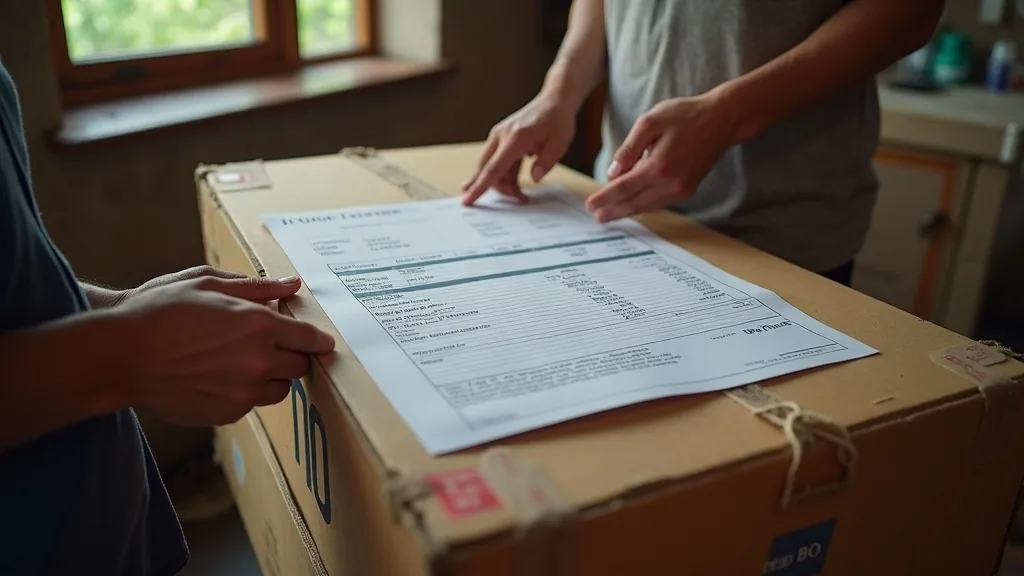
A customs-clean invoice and packing list for Bali exports needs seven things: matching shipper and consignee details, a six-to-eight-digit HS code per product line, real transaction values in one currency, net and gross weights, carton-level packing detail, an Incoterm with a named place, and identical totals across both documents. Get those right and most customs holds never happen.
Indonesia moved export declarations to electronic submission under DGCE Regulation 22/2024, and Bali forwarders documented transitional quirks in the system well into 2026. Electronic screening is unforgiving: the data on your commercial invoice and packing list feeds the export declaration directly, so a mismatch a human officer might once have waved through now flags automatically.
Why Do These Two Documents Decide Whether Your Cargo Moves?
Every commercial export leaving Bali needs a commercial invoice and a packing list, whatever the mode. Sea shipments add a Bill of Lading, which doubles as a title document; air shipments ex-Ngurah Rai International Airport travel under an Air Waybill. Both transport documents are issued from data you supply, so an error on the invoice copies itself down the chain.
Geography raises the stakes. Most containerized Bali cargo trucks overland to Surabaya before it ever meets a vessel, and typical LCL routing published by Bali forwarders in 2026 runs Bali loading, Java unloading, Singapore reloading, then destination discharge. Every handover is a point where paperwork gets re-checked against physical cartons.
Responsibility for preparing both documents sits with the exporter of record. When a supplier sells FOB or CIF, their team drafts the paperwork. Buyers purchasing under EXW export arrangements inherit the job themselves, because an EXW workshop in the Sukawati craft belt hands over goods, not documents — a gap that catches first-time furniture and handicraft buyers every season.
What Goes on the Commercial Invoice, Field by Field?
Work through the invoice top to bottom and treat every field as a data point customs will cross-check, because since 2024 that is literally what happens.
| Field | What to enter | Why customs cares |
|---|---|---|
| Exporter / shipper | Full legal name and address of the seller of record | Must match the export declaration |
| Consignee | The actual receiving party, spelled exactly | Feeds the destination import entry |
| Invoice number and date | Unique, sequential, dated | Anchors the shipment in both customs systems |
| Incoterm plus named place | For example “FOB Surabaya” or “EXW Gianyar” | Defines who pays what; must match your booking |
| Description per line | Plain language: “teak dining table, 200 x 100 cm” | Vague lines like “handicrafts” invite inspection |
| HS code per line | Six digits minimum, destination digits if known | Sets the duty rate; a wrong code means a hold |
| Quantity and unit | Pieces, sets, or pairs — one unit type per line | Cross-checked against the packing list |
| Unit price and line total | Real transaction prices | Valuation basis for duty |
| Total value and currency | Sum of all lines, one currency stated once | Insurance and duty both key off this figure |
| Country of origin | “Indonesia”, stated explicitly | Feeds the Certificate of Origin |
| Signature and stamp | An authorized signatory | Unsigned invoices are rejected at filing |
Two value rules do most of the protective work. First, declare the genuine transaction value. Undervaluing to shave duty backfires twice: customs valuation databases flag prices that sit far below reference levels for teak furniture or stone carvings, and cargo insurance is commonly charged at about 2 percent of declared goods value as of 2026, so a low declaration caps any claim you might later make.
Second, US-bound shippers lost their cushion when the United States suspended de minimis treatment for Indonesia in August 2025. Every commercial shipment to the US now attracts duties and full customs processing, and the AMS filing your forwarder submits is built from your invoice data. USA and Canada lanes also carry a Destination Delivery Charge per cubic metre plus AMS or ACI filing fees, so budget those line items early. All such figures are indicative, move with lane and season, and final decisions rest with carriers and authorities.
How Do You Build a Packing List That Mirrors the Invoice?
The packing list describes the physical shipment carton by carton. Where the invoice answers “what is this worth”, the packing list answers “what is in box seven”. A complete one carries:
- Carton or crate numbers, in unbroken sequence
- Contents of each carton, using the same product names as the invoice
- Quantity per carton and a running total
- Net weight and gross weight per carton, plus grand totals
- Dimensions per carton and total volume in cubic metres
- Packing material, with ISPM-15 heat-treatment marks noted for wooden crates — ISPM-15 is the international standard for wood packaging
- Shipping marks matching what is stencilled on the boxes
Carton-level detail is not bureaucratic decoration on Bali LCL. With cargo touched in Java and again in Singapore before destination, any handler along the chain must be able to reconcile a specific box against the list without opening it. Volume totals also set your freight bill: LCL sea freight prices per cubic metre, air freight prices per kilogram on chargeable weight, and once a shipment reaches roughly 13 cbm, FCL usually beats LCL. Your own packing list is the first place that threshold shows up.
Which Consistency Rules Prevent Customs Holds?
Most Bali export holds trace back to documents disagreeing with each other, not to any single document being wrong. Run these cross-checks before anything is filed:
- Quantities — invoice line totals equal the packing list running total, to the piece.
- Weights — packing list gross weight equals the Bill of Lading or Air Waybill draft weight.
- Descriptions — identical vocabulary everywhere; “stone carving” on one document and “garden ornament” on another reads as two different products.
- HS codes — one code per product across all filings, re-verified against the upcoming HS 2028 nomenclature revisions before they force reclassification.
- Values — one currency, line totals that sum correctly, no rounding drift between pages.
- Incoterm — the term on the invoice matches the quote and the transport document.
- Parties — consignee spelling identical everywhere; US AMS and Canadian ACI filings reject mismatched names.
- Origin — the invoice origin statement mirrors the Certificate of Origin, which per published forwarder guidance can reduce destination import duty where a trade agreement applies.
Copy-and-Keep Checklist Before You File
Print this table, or rebuild it as a spreadsheet, and tick every row before documents go to your forwarder.
| # | Pre-filing check | Done |
|---|---|---|
| 1 | Exporter and consignee names match on both documents | ☐ |
| 2 | Invoice numbered, dated, signed, and stamped | ☐ |
| 3 | Incoterm and named place stated and consistent with the booking | ☐ |
| 4 | Every line has a plain-language description and HS code | ☐ |
| 5 | Real transaction values, one currency, totals verified | ☐ |
| 6 | Carton numbers sequential with contents per carton listed | ☐ |
| 7 | Net weight, gross weight, and cbm totalled and cross-checked | ☐ |
| 8 | ISPM-15 marks recorded for any wooden crate or pallet | ☐ |
| 9 | Wood or stone endorsements and phytosanitary needs flagged to the forwarder | ☐ |
| 10 | Certificate of Origin data drawn from the final invoice version | ☐ |
| 11 | US or Canada shipments: data ready for AMS or ACI filing | ☐ |
| 12 | Signed copies archived for post-clearance audit | ☐ |
Rows eight and nine matter more from Bali than almost anywhere else. Teak, rattan, and stone dominate the island’s export mix, and published Bali forwarder terms in 2026 list wood and stone endorsements, phytosanitary certificates, and special fumigation as standard extra line-items. Flagging them at the document stage, rather than at the Surabaya depot, keeps trucking schedules intact.
One habit ties everything together: version control. Amend the invoice, and the packing list, Certificate of Origin, and declaration data must all move with it. Date each revision, delete superseded drafts, and send your forwarder one final set — never a trail of “updated” attachments for someone else to untangle.
Frequently Asked Questions
Should the invoice value match what I actually paid the Bali workshop?
Yes. Indonesian customs values exports on the real transaction price, so the invoice should show what you actually agreed, including deposit and balance payments combined. Show discounts as visible line items rather than silently lowering unit prices. Undervaluing also hurts you commercially: with cargo insurance commonly charged at about 2 percent of declared value as of 2026, a low figure caps any claim.
Can I combine goods from several Bali suppliers on one invoice and packing list?
You can, provided one party acts as exporter of record and issues both documents under its own name. Keep each supplier’s goods on separate invoice lines with their own HS codes, and let the packing list identify which cartons came from which workshop. Your forwarder then files a single export declaration covering the consolidated load.
What language and format do Indonesian customs expect for the invoice and packing list?
Prepare both in English, which destination customs and carriers read without translation. Since DGCE Regulation 22/2024 moved Indonesian export declarations to electronic submission, your forwarder uploads the documents digitally, and clean PDFs generated from a spreadsheet or invoicing tool work fine. Use one currency throughout, keep signed copies, and retain the files for post-clearance audits.
Need this priced for your lane?
Tell us the cargo, the lane and the Incoterm. You get a written, leg-by-leg quote — every charge named.