
Bali Freight Forwarder Journal ·
Bali Export Packing Standards 2027: The Full Checklist
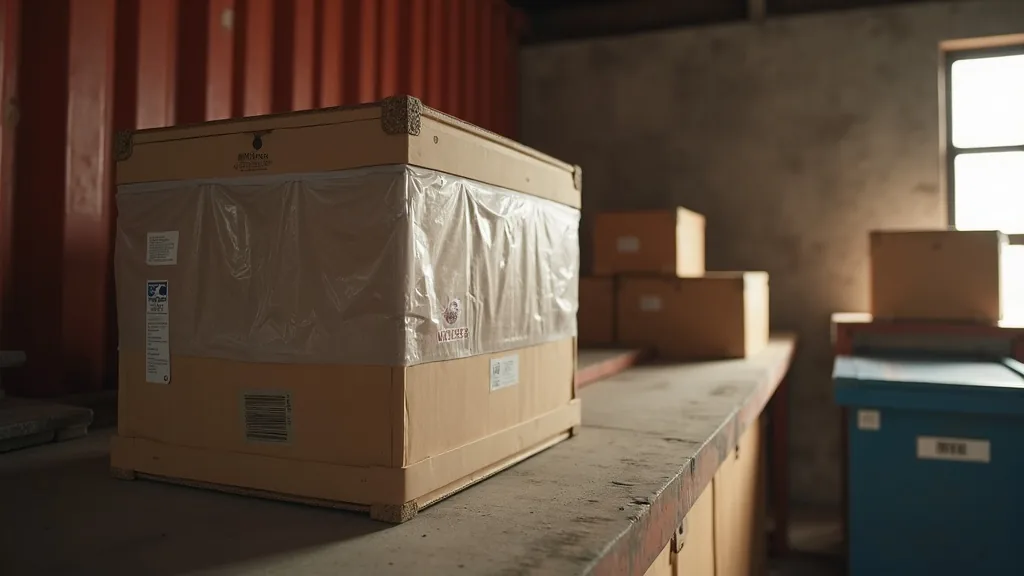
A 2027-ready export packing checklist for Bali cargo rests on three pillars: ISPM-15 certified crating, chain-of-custody labeling that satisfies tightening EU timber rules, and documented material choices. Standards are moving, not settled — this guide reads the dated 2026 signals, frames them honestly as an outlook rather than a prediction, and turns them into a printable checklist you can apply to every shipment.
Why Are Packing Standards Tightening Into 2027?
Four regulatory currents, all documented through 2026, converge on the way Bali cargo gets crated and labeled. None of them is speculation; each carries a date.
- EU timber-legality and deforestation-free due-diligence rules tighten through 2027, pulling wood and rattan shipments into chain-of-custody territory.
- HS 2028 nomenclature revisions will force HS-code re-verification on every product line, including the codes printed on packing lists and crate labels.
- Indonesia’s customs authority moved to electronic export submissions under DGCE Regulation 22/2024, with transitional ambiguities documented through 2025-2026 — clean, consistent packing paperwork reduces that friction.
- The US suspended de minimis treatment for Indonesia in August 2025, so every commercial shipment to the US now attracts duties and full customs processing, where sloppy packing declarations get noticed.
Rules can shift again before January 2027, and final decisions always rest with carriers and authorities. The checklist below is built so that if standards land softer than expected you have lost nothing, and if they land harder you are already compliant.
What Belongs on the 2027 Bali Packing Checklist?
The physical journey explains the physical standard. Typical LCL routing published by Bali forwarders in 2026 has cargo loaded in Bali, trucked inland to Surabaya, unloaded in Java, reloaded in Singapore, then unloaded again at destination. Four or more touches per shipment is why professional crating is non-negotiable — and why putting implementation in the hands of a Bali packing and consolidation team that builds ISPM-15 crates as standard practice costs less than replacing a cracked stone carving in Rotterdam. Run every 2027 booking through the table below before the truck leaves for Surabaya; it is written to be printed and pinned near the packing bench.
| Checklist item | 2026 baseline | 2027-forward standard | Applies to |
|---|---|---|---|
| Wood crating | ISPM-15 heat-treated and stamped | Same, plus retained treatment records per consignment | All wood packaging |
| Species documentation | Optional on most lanes | Chain-of-custody file for EU-bound teak and rattan | Wood and rattan furniture |
| Crate labeling | Shipping marks and port pair | Add HS code (re-verified against HS 2028) and a lot ID | All export crates |
| Fill and void material | Any clean material | Prefer recyclable, paper-based fill; log what was used | Handicrafts, artwork, fragiles |
| Humidity control | Absorbers included in published Bali LCL rates | Same, logged per crate | All sea freight |
| Endorsements and fumigation | Wood and stone endorsements, phytosanitary certificates, special fumigation as extra line-items | Book earlier; EU lanes may request certificates upfront | Wood, stone, natural fibre |
| Consolidation eligibility | Most goods LCL-eligible | Confirm early — some Ethylene Oxide-treated goods cannot ship LCL and must go FCL | Treated goods, some textiles |
Every row survives a softer 2027 as well — nothing here is wasted effort if a deadline slips a quarter.
How Do EU Timber Rules Change Chain-of-Custody Labeling?
For workshops across the Sukawati and Gianyar craft belt shipping teak, rattan, or carved wood to Europe, labeling is the biggest change. Deforestation-free due diligence means an EU importer must trace material back toward a legal origin, and importers push that burden down the chain to the exporter.
Practically, a 2027-ready chain-of-custody file per consignment holds four things:
- Supplier declarations naming the timber source or plantation.
- Purchase records connecting the raw material to the finished piece.
- A lot or batch ID that appears identically on the crate label, the packing list, and the commercial invoice.
- Photos of the marked crates taken before sealing.
None of this is exotic paperwork; the discipline is consistency. A crate stamped with a lot ID that matches nothing in the documents is, from a compliance officer’s chair, an unlabeled crate.
Which Material Choices Are Trending for 2027?
Sustainability-driven material selection is arriving through buyer contracts before it arrives through regulation. European and Australian buyers increasingly write packaging clauses into purchase orders, and 2026 practice in Bali already reflects the shift.
- Heat-treated pine remains the default crate wood — under ISPM-15, the international standard for wood packaging, it is the treatment and stamp that certify compliance, not the species.
- Paper-based void fill and corrugated inserts are displacing foam peanuts for handicrafts and artwork.
- Reusable crate designs earn favor on repeat lanes such as villa fit-out programs.
- Humidity absorbers stay essential; they are included in published Bali LCL rates for good reason on a routing with a Singapore transhipment.
A cost note, indicative as of 2026: LCL sea freight is priced per cubic metre, so a tighter crate design that trims 10-15% of volume often pays for its own material upgrade. Cargo insurance is commonly charged at about 2% of declared goods value. Both figures move with lane, fuel, and season — they are estimates, never contract terms, and final decisions rest with carriers and authorities.
How Should You Time Documents and HS Codes for 2027?
Work backward from the sailing date. Sea shipments move containerized via inland trucking from Bali to Surabaya, with Tanjung Priok and Tanjung Emas as alternate gateways and Benoa Port serving Bali directly; air cargo flies ex-Ngurah Rai International Airport, Denpasar, where FedEx opened a new gateway in October 2024 that includes streamlined customs handling. Whichever mode you book, the electronic submissions regime under DGCE Regulation 22/2024 rewards exporters whose digital paperwork matches their physical crates on the first pass.
| Weeks before departure | Action |
|---|---|
| 8-10 | Re-verify HS codes against HS 2028 nomenclature for every SKU |
| 6-8 | Open the chain-of-custody file; request supplier declarations |
| 4-6 | Book fumigation, phytosanitary certificates, wood or stone endorsements |
| 2-4 | Confirm LCL versus FCL — from roughly 13 cbm, FCL is usually cheaper; Ethylene Oxide-treated goods must go FCL |
| 1-2 | Finalize commercial invoice, packing list, Bill of Lading draft or Air Waybill, and a Certificate of Origin where it reduces destination duty |
For US-bound cargo, add the AMS filing and a Destination Delivery Charge per cbm to the plan; Canada lanes use ACI filing instead. Australia remains the most predictable lane ex-Bali, commonly quoted at 4-8 weeks door-to-door in 2026 commentary — a useful benchmark when a buyer asks how early the 2027 paperwork clock should start.
Frequently Asked Questions
Do my existing ISPM-15 crates need re-certification for 2027 shipments?
No re-certification wave has been announced as of 2026. ISPM-15 remains the international standard for wood packaging, and a valid heat-treatment stamp stays valid. What changes for 2027 is record-keeping: EU-bound shipments increasingly need treatment records and chain-of-custody paperwork behind the stamp. Keep supplier treatment certificates on file per consignment and you are covered either way.
When should I start collecting chain-of-custody documents for EU-bound furniture?
Start now, in 2026, at the purchase-order stage. EU timber-legality and deforestation-free due-diligence rules tighten through 2027, and supplier declarations are far easier to obtain when the wood is bought than a year later. Build the habit per consignment: source declaration, purchase record, and one lot ID repeated on crate, packing list, and invoice. Retro-fitting documents after a buyer demands them is the expensive path.
Will HS 2028 changes affect how consolidated Bali cargo is packed?
Indirectly, yes. HS 2028 nomenclature revisions force HS-code re-verification, and those codes appear on packing lists and, under this checklist, on the crate labels of consolidated shipments. A code change does not alter the crate itself, but mismatched codes between label, packing list, and electronic submission can delay clearance. Re-verify each SKU before your first 2027 booking and update label templates once.
Need this priced for your lane?
Tell us the cargo, the lane and the Incoterm. You get a written, leg-by-leg quote — every charge named.