
Bali Freight Forwarder Journal ·
How Bali Freight Forwarders Calculate Charges per CBM & Kg
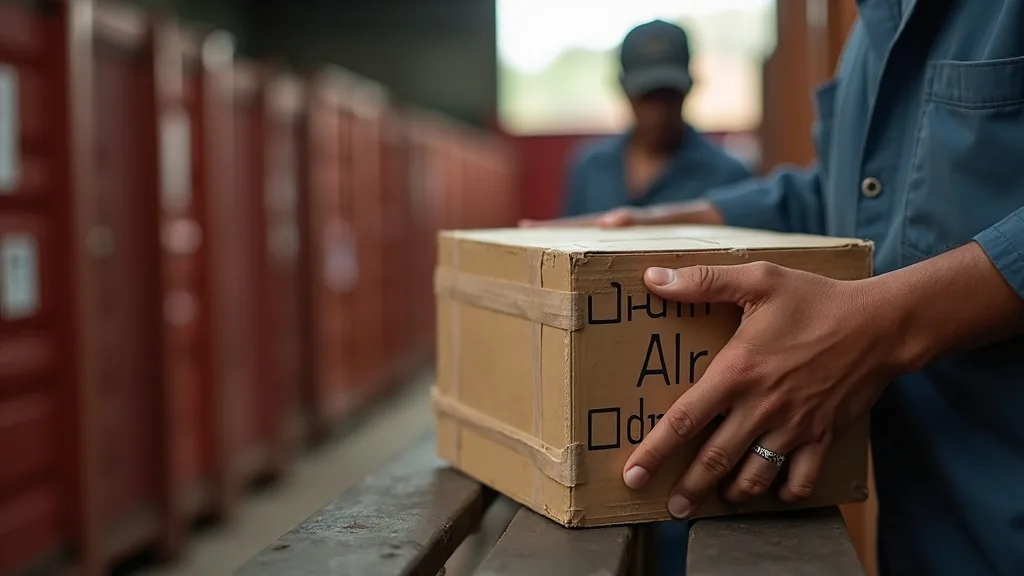
Bali freight forwarders price sea LCL per cubic metre (CBM) and air freight per kilogram of chargeable weight — whichever is greater between actual and volumetric weight. As of 2026, published Bali LCL terms bill volume rounded up, apply a one-CBM minimum, and bundle trucking to Surabaya, pickup, packing, and export documents into the per-CBM rate.
What Does “Per CBM” Mean on a Bali Sea Freight Quote?
A cubic metre is exactly what it sounds like: length × width × height, measured in metres, after export packing. Sea LCL — less than container load — shares one container among many shippers, so the cost is split by the space each consignment occupies rather than what it weighs. A crate of Ubud stone carvings and a bundle of Canggu rattan chairs may differ by 300 kg yet claim the same slice of the box.
Geography shapes the maths too. Bali’s seaport is Benoa, but most containerized exports truck overland to Surabaya before meeting a vessel, and typical LCL routing published by Bali forwarders in 2026 sees cargo loaded in Bali, unloaded in Java, reloaded in Singapore, then unloaded again at destination. Four touches per journey is why forwarders measure the packed, crated dimensions — and why the crate itself is part of your billable volume.
How Do Forwarders Calculate a Sea LCL Charge Step by Step?
Take a real-shaped example: ten cartons of teak homeware collected from the Sukawati craft belt, each carton 60 × 50 × 40 cm.
| Step | What the forwarder does | Worked example |
|---|---|---|
| 1. Measure each package | L × W × H in metres, after packing | 0.60 × 0.50 × 0.40 = 0.12 cbm |
| 2. Multiply by piece count | Sum every package in the consignment | 0.12 × 10 = 1.20 cbm |
| 3. Apply the minimum | Most published terms bill at least 1 cbm | 1.20 cbm stands |
| 4. Apply the per-CBM rate | Illustrative USD 185 per cbm — not a tariff | 1.20 × 185 = USD 222 |
| 5. Add line items | Endorsements, certificates, destination fees | Quoted separately |
That USD 185 figure is purely illustrative — lane, fuel, and season move the number, which is why serious quotes carry a date. The per-CBM line is also just one row in a longer schedule; the full freight forwarding rates structure covers FCL, air, and door-to-door pricing beyond what this walkthrough shows.
One nuance for dense cargo: many terms carry a weight-or-measure clause, billing one revenue tonne per 1,000 kg where weight exceeds volume. Stone shipments from the Gianyar workshops occasionally cross that line; furniture and textiles almost never do.
How Does Chargeable Weight Work for Air Freight from Bali?
Air cargo flies ex-Ngurah Rai International Airport in Denpasar — where FedEx opened a new gateway in October 2024 — and is billed per kilogram of chargeable weight. Carriers charge the greater of actual weight and volumetric weight, and the near-universal formula divides volume in cubic centimetres by 6,000.
Volumetric weight (kg) = (length × width × height in cm) ÷ 6,000, calculated per piece and summed.
| Shipment | Actual weight | Total volume | Volumetric weight | Billed (chargeable) |
|---|---|---|---|---|
| 6 boxes rattan lampshades, 50 × 50 × 40 cm each | 48 kg | 600,000 cm³ | 100 kg | 100 kg |
| 2 crates stone bookends, 40 × 30 × 35 cm each | 160 kg | 84,000 cm³ | 14 kg | 160 kg |
| 4 cartons textiles, 60 × 40 × 40 cm each | 60 kg | 384,000 cm³ | 64 kg | 64 kg |
The lampshade row is the classic Bali trap: light, bulky handicrafts get billed at double their scale weight. Compressing packaging — vacuum bags for textiles, nesting baskets instead of boxing them individually — cuts the invoice in a way no rate negotiation can match.
What Minimum Charges Should You Expect in 2026?
Minimums exist because clearing a 20 kg box consumes nearly the same paperwork and labour as clearing 200 kg. As of 2026, expect three floors, all indicative:
- Sea LCL: a one-CBM minimum is standard in published Bali forwarder terms, so 0.4 cbm of product samples is billed as a full cubic metre.
- Air freight: carriers commonly apply a flat minimum charge below roughly 45 kg chargeable weight, with per-kg rates stepping down at higher weight breaks.
- Courier: below about 30-50 kg, express parcel services often undercut formal air freight once minimums are counted — a segment forecast to grow around 7.34% CAGR for cross-border courier-express-parcel revenue through 2031.
What Do Published Bali LCL Rates Actually Include?
Per published Bali forwarder terms in 2026, a per-CBM LCL rate typically bundles:
- Ocean freight to the named destination port
- Inland trucking from Bali to Surabaya
- Cargo pickup anywhere in Bali — Seminyak, Canggu, Ubud, Sanur, Kuta, Denpasar, and the Sukawati/Gianyar craft belt
- Export packing and humidity absorbers
- Standard export documents: commercial invoice, packing list, Bill of Lading
Billed as extras, because they depend on the goods: wood and stone endorsements, phytosanitary certificates, special fumigation, and ISPM-15-compliant crating where destination rules demand it. USA and Canada lanes add a Destination Delivery Charge per cbm plus AMS (US) or ACI (Canada) filing fees — and since the US suspended de minimis treatment for Indonesia in August 2025, every commercial US-bound shipment attracts duties and full customs processing regardless of value. Cargo insurance commonly runs about 2% of declared goods value.
Origin handling, in other words, sits mostly inside the rate; compliance paperwork and destination charges sit mostly outside it. Ask for both columns before comparing forwarders.
When Does Per-CBM Maths Point You to FCL Instead?
Around 13 cbm, per 2026 Bali forwarder commentary, the totals cross: a full 20-foot container becomes cheaper than paying the per-CBM LCL rate on the same volume — and your cargo stops sharing space, skips the Singapore reload, and avoids co-loaded neighbours. Some Ethylene Oxide-treated goods cannot ship LCL at all and must move FCL regardless of volume. If a villa fit-out or furniture order is trending past 10-11 cbm, price both modes before committing.
All figures above are indicative estimates as of 2026, not contractual rates — lanes, fuel surcharges, and season move them, and final decisions rest with carriers and authorities.
Frequently Asked Questions
Why is my billed air freight weight higher than the scale weight?
Because carriers bill chargeable weight: the greater of actual and volumetric weight, with volumetric calculated as length × width × height in centimetres divided by 6,000 per piece. Bulky, light Bali cargo — lampshades, baskets, rattan — routinely produces volumetric figures double the scale weight, so the invoice follows the volume, not the scales.
Do Bali forwarders round up the CBM figure on LCL shipments?
Yes, in two ways per published 2026 terms: volume is measured on packed, crated dimensions and commonly rounded up rather than down, and anything under one cubic metre is billed at the one-CBM minimum. Measure after crating, not before — a professional export crate can add roughly 10-15% to raw product volume, and that crate is billable space.
Is the per-CBM rate the final price for LCL from Bali?
No. The per-CBM rate bundles ocean freight, Bali-Surabaya trucking, pickup, packing, and export documents, but wood or stone endorsements, phytosanitary certificates, special fumigation, insurance at about 2% of declared value, and US/Canada destination charges (DDC plus AMS or ACI filing) are billed separately. Treat every 2026 figure as indicative; carriers and authorities decide final outcomes.
Need this priced for your lane?
Tell us the cargo, the lane and the Incoterm. You get a written, leg-by-leg quote — every charge named.