
Bali Freight Forwarder Journal ·
How to Consolidate Cargo in a Bali Warehouse
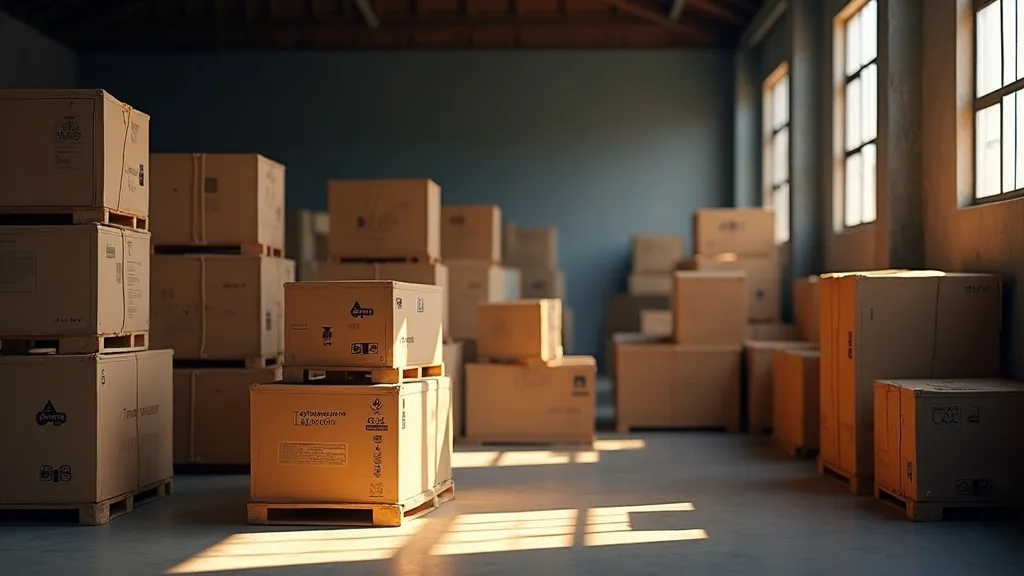
To consolidate cargo in a Bali warehouse, you route every supplier delivery to one export-ready facility, verify each item against its purchase order on arrival, repack the lot into ISPM-15 crates or pallets, and ship everything under a single export file — one invoice set, one Bill of Lading, one customs submission.
That single-file discipline is the whole point. Five suppliers shipping separately means five sets of documents, five minimum charges, and five chances for something to go wrong between a Bali workshop and your destination port. One consolidated file collapses all of that into a shipment you can actually track.
Why Consolidate in a Bali Warehouse Instead of Shipping Direct?
Because LCL cargo out of Bali gets handled a lot. Typical routings published by Bali forwarders in 2026 load cargo in Bali, unload it in Java, reload it in Singapore, then unload again at destination. Every touch is a chance for a chipped carving or a crushed carton — and every separate shipment multiplies those touches.
Consolidation fixes three problems at once:
- Handling risk. Goods from multiple suppliers get repacked once, professionally, into crates built for that four-touch routing — the core of what a managed packing and consolidation services desk does for buyers who cannot be on the island.
- Cost per cubic metre. LCL sea freight is priced per cbm as of 2026. Ten suppliers sending ten part-filled boxes pay for air; one warehouse team repacking them into dense, stackable crates pays for cargo.
- Paperwork. One commercial invoice and one packing list cover the whole lot, instead of a stack of files no destination broker wants to reconcile.
If you are buying furniture in Ubud, stone in the Sukawati–Gianyar craft belt, and textiles in Seminyak, direct shipping from each workshop is almost never the cheap option. Consolidation usually is — with the exceptions covered further down.
How Do Multi-Supplier Pickups Across Bali Actually Work?
You share your supplier list — names, addresses, what was ordered, when each piece finishes — and the warehouse schedules collections around those finish dates. Published Bali LCL rates in 2026 typically include pickup anywhere on the island, so collections from Seminyak, Canggu, Ubud, Sanur, Kuta, Denpasar, and the Sukawati–Gianyar workshops normally ride inside the base rate rather than as separate charges.
Two practical rules make pickups painless:
- Give each supplier a reference code. “Order BF-102, Ubud, 4 teak consoles” on every carton means the receiving team can match goods to your file in minutes.
- Never let a supplier pack for export. Workshop packing is for the truck ride, not for a Bali–Java–Singapore–destination routing. Let them wrap for transit; let the warehouse crate for the ocean.
What Does the Consolidation Process Look Like, Step by Step?
| Stage | What happens | Typical window | What you should receive |
|---|---|---|---|
| 1. Booking | Supplier list, order details, and destination lodged with the warehouse | Day 0 | Written confirmation and an indicative per-cbm estimate |
| 2. Pickups | Collections scheduled across Bali as each order finishes | Days 1–14 | Pickup confirmations per supplier |
| 3. Receiving checks | Count, condition, and moisture inspection against your purchase orders | Within 1–2 days of arrival | Photo report and discrepancy notes |
| 4. Repacking | Goods consolidated into ISPM-15 crates or pallets with humidity absorbers | 2–5 days | Packing list with final dimensions and weight |
| 5. Export file | Single commercial invoice, packing list, and permits prepared; electronic customs submission | 2–4 days | Draft documents for your approval |
| 6. Dispatch | Trucking to the load port — most containerised Bali cargo trucks to Surabaya — then vessel loading | Per sailing schedule | Bill of Lading |
Timing moves with supplier delays, sailing schedules, and inspection queues, so treat the windows as planning figures rather than promises.
What Happens During Receiving Checks and Repacking?
Receiving is where consolidation earns its keep. A competent warehouse checks three things the moment a supplier truck arrives:
- Quantity — does the delivery match the purchase order, piece by piece?
- Condition — cracks, chips, wobbly joinery, wet packaging. Photographed before signing anything.
- Moisture — freshly made teak and suar furniture can leave the workshop damp. Damp wood in a sealed container grows mould by Singapore.
Problems surface while the supplier can still fix them — the entire advantage of checking in Bali rather than unpacking disappointment at destination.
Repacking then converts a pile of mismatched cartons into export freight. Crates go out on ISPM-15 treated timber, the international standard for wood packaging, with humidity absorbers included under typical published Bali forwarder terms. Wood and stone endorsements, phytosanitary certificates, and special fumigation are the usual extra line-items for furniture, carvings, and rattan. One caveat from 2026 forwarder terms: some Ethylene Oxide–treated goods cannot travel LCL at all and must ship FCL, so flag treated products before booking.
When Does Consolidation Save Money — and When Does It Not?
| Your situation | Better move | Why |
|---|---|---|
| 2–12 cbm from several suppliers | Consolidate into one LCL file | One set of documents and minimums; per-cbm pricing rewards dense packing |
| Around 13 cbm or more | Consolidate into one FCL container | At roughly 13 cbm, FCL is usually cheaper than LCL as of 2026 |
| One supplier, one order, urgent | Direct LCL or air | A consolidation hold adds days you may not have |
| Samples under ~1 cbm | Courier or air freight | Warehouse handling can exceed the freight saving |
| Suppliers finishing months apart | Consolidate in phases | Storage fees on early goods can erode the saving — agree free-storage terms first |
Run the numbers on your real volumes. Cargo insurance commonly prices at about 2% of declared goods value as of 2026, and USA or Canada lanes add a Destination Delivery Charge per cbm plus AMS or ACI filing fees regardless of how you ship — consolidation shrinks these by cutting the number of files, not by making them vanish. On the island’s most predictable lane, Australia, 2026 commentary commonly quotes 4–8 weeks door-to-door for consolidated sea freight. All figures here are indicative estimates that move with lanes, fuel, and season; final decisions rest with carriers and authorities.
How Is a Consolidated Shipment Documented and Cleared?
One export file, four core elements:
- Commercial invoice — a single invoice covering all suppliers, with values per line item.
- Packing list — crate-by-crate contents, dimensions, and weights from the repacking stage.
- Bill of Lading — the sea freight title document, issued once for the whole consolidation.
- Certificate of Origin — optional but often worthwhile, since it can reduce import duty at destination.
Indonesian customs moved to electronic export submissions under DGCE Regulation 22/2024, with transitional ambiguities documented through 2025 and 2026 — a strong argument for letting one warehouse team file one clean submission instead of coordinating five. US-bound buyers should also note that the United States suspended de minimis treatment for Indonesia in August 2025, so every commercial shipment to the US now attracts duties and full customs processing — another reason one consolidated entry beats five small ones.
Frequently Asked Questions
How long can my goods sit in a Bali warehouse before the consolidation ships?
Most Bali consolidation warehouses allow a free-storage window so orders finishing on different dates can accumulate without charges; the length varies by forwarder, so confirm it in writing before your first pickup. Beyond the free period, storage is typically billed per cubic metre per week. Sequence supplier deadlines so the slowest workshop sets your dispatch date, not your storage bill.
Can furniture, stone carvings, and textiles go into one consolidated shipment?
Yes, and mixed lots are the norm for Bali consolidations. Each category keeps its own compliance trail inside the single file: wood and stone endorsements, phytosanitary certificates where required, and ISPM-15 crating throughout. Textiles are typically boxed and loaded above heavier crates. The warehouse separates items by weight and fragility during repacking so stone never rides against carved teak.
Do I need to be in Bali while my cargo is being consolidated?
No. Most consolidation clients manage everything remotely: suppliers deliver against your reference codes, the warehouse sends photo reports at receiving and after crating, and you approve the draft invoice and packing list by email or WhatsApp before customs filing. Being on the island helps for final quality checks on high-value pieces, but the process is built for absent buyers.
Need this priced for your lane?
Tell us the cargo, the lane and the Incoterm. You get a written, leg-by-leg quote — every charge named.