
Bali Freight Forwarder Journal ·
How to Pack Fragile Items for Sea Freight from Bali
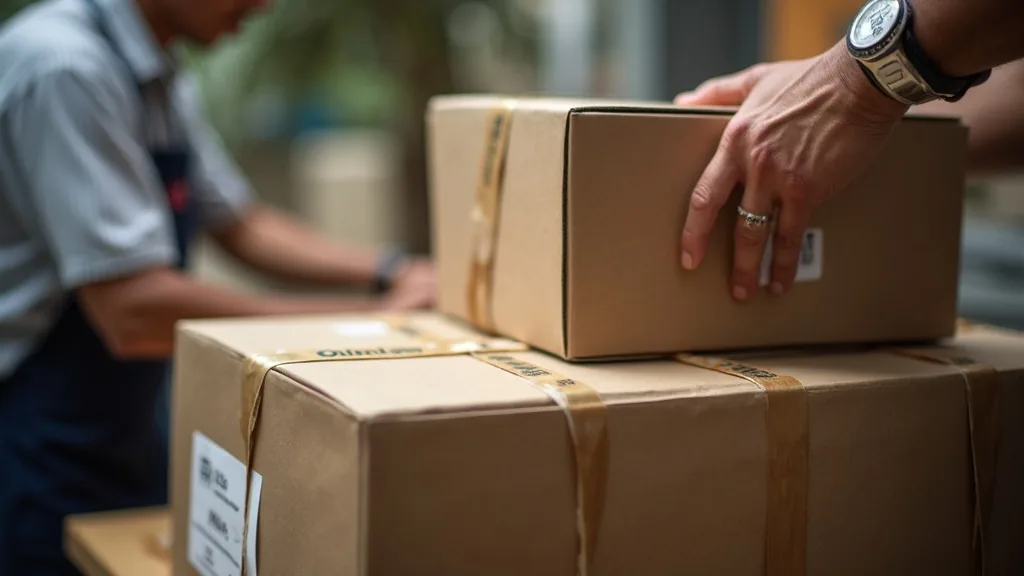
Pack fragile items for sea freight from Bali in a sealed plywood crate built to the ISPM-15 standard, lined with at least 5 cm of foam on every face, packed so nothing shifts, dosed with humidity absorbers, and strapped to a skid. The LCL route out of Bali involves four handlings; pack for the roughest one.
Why Does Bali’s Sea Freight Route Punish Weak Packing?
Most containerized cargo leaving Bali never sails from the island itself. Forwarders collect from workshops in Seminyak, Canggu, Ubud, Sanur, and the Sukawati–Gianyar craft belt, then truck the goods overland from Bali to Surabaya, where they enter a shared container.
Typical LCL routing published by Bali forwarders in 2026 runs like this: loaded in Bali, unloaded in Java, reloaded in Singapore, then unloaded again at destination. That is four handlings minimum, and each one is a fresh chance for a forklift bump, a stack crush, or a drop from a tailgate.
If you are sharing container space with other shippers, a Bali LCL freight forwarder will usually fold export packing into its published per-cubic-metre rate, and for breakables that service is not optional. Your crate rides beside someone else’s machine parts for weeks, handled by crews who have never seen your invoice and cannot tell a celadon glaze from a cement bag.
So the working rule: pack every fragile piece as if it will be dropped once, compressed under a tonne of neighbouring cargo, and parked in 90 percent humidity for a month. On this lane, at least one of the three usually happens.
How Do You Build a Crate That Survives Four Handlings?
A sea-freight crate is a structure, not a box. Bali packers who ship ceramics and glass daily build to a consistent pattern:
- Frame first. A timber skeleton of roughly 3 x 5 cm battens carries the load; 9–12 mm plywood walls close it in. The plywood keeps out water and prying; the frame takes the stacking weight.
- ISPM-15 timber only. ISPM-15 is the international standard for wood packaging, and every batten and skid must carry the heat-treatment stamp. Untreated wood invites quarantine holds or forced fumigation at destination.
- Screws, not nails. Customs officers open crates. A screwed lid comes off and goes back on; a nailed lid comes off with a crowbar and returns as splinters.
- Skids under the base. Bearers lift the floor so forklift tines slide under the crate instead of into it.
- Assume the markings are ignored. The crate must survive being stored upside down under another crate. Physics protects cargo; stickers do not.
Inside the shell, cushioning does the real work. Glass and thin ceramics want 5 cm of PE foam on all six faces plus individual wrapping, so every piece sits in its own cell. Void fill must be rigid — foam offcuts, honeycomb board, cut polystyrene blocks. Loose paper crushes flat on the Surabaya trucking leg and leaves your cargo rattling for the remaining 6,000 km. The tilt test is the pass mark: tip the packed crate 30 degrees and listen. Any sound means repack.
What Packing Spec Does Each Fragility Class Need?
| Class | Typical Bali cargo | Outer packing | Cushioning | Void-fill rule |
|---|---|---|---|---|
| A — extreme | Glassware, thin-wall ceramics, mirrors, glazed lamps | Full sealed plywood crate, ISPM-15 | 5–7 cm foam on all faces, each piece wrapped | Zero movement; cut foam blocks or cell dividers |
| B — high | Stone carvings, framed art, terracotta | Braced crate or heavy skid box | 3–5 cm foam plus edge protectors | Blocked and braced to the crate base |
| C — moderate | Teak furniture, rattan, villa fit-out joinery | Corner-protected wrap, carton or slat crate | 2–3 cm foam on contact points | Strapped to pallet, hollows filled |
| D — low | Textiles, cushions, unbreakable handicrafts | Double-wall cartons, palletized | Kraft paper or bubble wrap | Uniform stacks, film-wrapped |
Two notes on the table. Mixed shipments take the spec of the most fragile item in the crate — a teak console packed with its glass top is Class A cargo. And class drives cost: LCL out of Bali is priced per cubic metre as of 2026, and Class A packing can add 15–25 percent to measured volume.
How Should You Pack Ceramics, Glass, and Stone Differently?
Each material fails in its own way on the Bali–Java–Singapore chain, so each gets its own answer.
| Material | How it fails in transit | The packing answer |
|---|---|---|
| Ceramics | Glaze chips and hairline cracks from road vibration on the Bali–Surabaya trucking leg | Wrap each piece, use cell dividers, never let two pieces touch; nest bowls with foam sheets between |
| Glass | Shear cracks when crates are stacked or racked | Pack panes and tabletops vertically on edge, foam-lined slots, crate braced against side pressure |
| Stone | Point-loading — a 200 kg statue punches through its own floor | Bottom-heavy crate, weight spread across the full skid area, statue bolted or blocked at the base |
Stone deserves an extra word because Bali exports so much of it. Carvings shrug off knocks that would destroy porcelain, then crack from toppling or from resting their mass on one small contact point. Per published Bali forwarder terms, stone shipments also carry a stone endorsement as an extra line item, just as wooden goods carry a wood endorsement and, where required, phytosanitary certificates.
What About Humidity, Palletization, and Insurance?
A container crossing the equator sweats: daytime heat loads the air with moisture, night cooling condenses it onto the ceiling, and it rains slowly onto the cargo for weeks. Published Bali LCL rates typically include humidity absorbers for exactly this reason, and for fragile goods they matter twice over — damp cardboard collapses, and collapsed cartons stop protecting anything.
Practical moisture rules for a Bali packing bay:
- Hang or place calcium-chloride absorbers inside the crate, sized to its volume, not a token sachet.
- Never shrink-wrap timber or upholstered pieces directly in plastic film; trapped moisture breeds mould by week two. Use breathable wrap under the film.
- Seal desiccants inside the crate on the day it closes, not days before.
Palletization is the last physical layer. Crates strapped to pallets move by forklift instead of by hand, which removes the single most common drop scenario. Keep pallet footprints uniform, leave fork access on both long sides, and band the crate to the pallet rather than trusting film alone.
Then insure the shipment anyway. Cargo insurance is commonly charged at about 2 percent of declared goods value as of 2026, which is modest against the replacement cost of a gallery consignment. Note that insurers look hard at packing standards when a breakage claim lands — professional crating is effectively part of the premium. And a volume check before you book: once a shipment reaches roughly 13 cubic metres, FCL usually beats LCL on price, and a container all your own also means two fewer handlings for your fragile cargo. All figures here are indicative estimates, not contract rates; final decisions rest with carriers and authorities.
Frequently Asked Questions
Can I pack fragile ceramics myself and hand them to a forwarder in Bali?
You can, but most Bali forwarders inspect owner-packed breakables and often insist on re-crating before accepting them into a shared container, since one crushed box can damage neighbouring shippers’ cargo. Insurers also routinely reject claims on owner-packed fragile goods. Delivering your pieces loose-wrapped and paying for professional crating is almost always cheaper than a single failed claim.
How much volume does professional crating add to a fragile shipment?
Expect roughly 15–25 percent more cubic metres once foam layers, crate walls, and skid height are measured in, and because Bali LCL is priced per cubic metre as of 2026, that margin lands on your invoice. Ask for crated dimensions before booking; if you are anywhere near 13 cbm, the added volume can tip you into cheaper FCL territory.
Do stone carvings from Bali need a full crate or just a pallet?
Small pieces under about 30 kg can travel palletized inside braced boxes, but taller carvings and heavy bases need a full crate with the mass spread across the skid, because stone survives knocks yet cracks from toppling and point-loading. Budget for the stone endorsement that appears as an extra line item in published Bali LCL terms, and confirm it at quote stage.
Need this priced for your lane?
Tell us the cargo, the lane and the Incoterm. You get a written, leg-by-leg quote — every charge named.